| ||||||
 |
The LEGACY of |
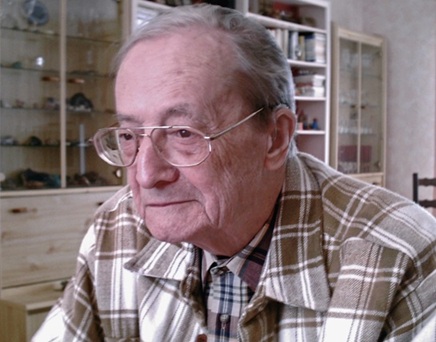
From Science to Initiation: A Bridge Between the Occult and the Rational Jean Dubuis (1919–2010) stands as a significant figure in Western esotericism.
Trained as an electronics engineer, he combined the rigor of a scientist with the lived experience of an initiate,
exploring the Qabal* (see below regarding this spelling), Alchemy, and Hermeticism. An Unconventional Path: From Science to SpiritualityThroughout his life, Jean Dubuis sought bridges between scientific inquiry and the non-rational dimensions of existence. He pursued in-depth study of occult traditions, convinced that traditional Knowledge is fully compatible with a rational, experimental approach. Jean Dubuis’ Major Contribution to Qabal and AlchemyJean Dubuis’ work focused, on one hand, on clarifying the understanding and practical use of the Qabal,
and on the other, on unveiling and rendering accessible many alchemical texts of the Ancients. His writings rely on clearly explained symbolism and consistently
invite experimentation and verification. His constant aim was to transmit the tools of Knowledge so that each individual might walk the Path independently.
• The Qabal: Why Jean Dubuis Rejects the Traditional Spelling “Kabbalah” Jean Dubuis deliberately chose the letter Q (“Qoph”), whose meaning implies a Knowledge embracing the totality of the Universe. By contrast, the traditional spelling with K (“Kaph”) suggests an orientation toward physical life through white or black magic, that is, an occult practice rather than a comprehensive inner Knowledge. In one of his articles, Jean Dubuis explains: The Qabal describes the creation of the Universe, the origin and destiny of humanity, human nature, and the mode of action of the Creator. The “operative” Qabal leads toward a unified form of Knowledge and toward inner initiation. • The Alchemy: Alchemy offers a Knowledge of Nature encompassing both its physical and metaphysical
dimensions. Its true purpose is to lead to inner initiation, meaning the connection between conscious awareness and the various levels of the subconscious.
Seeking to make Alchemy more accessible, Jean Dubuis designed a progressive course of study beginning with plant Alchemy, which is simpler and immediately practicable,
before advancing to mineral Alchemy, which is more complex.
His approach rests on a central idea:
“Alchemy is a means of exploring the relationship between Matter and Spirit.” Through it, one can verify that matter is a condensation of a single primordial energy, a view that resonates with modern quantum physics.
True Initiation, therefore, lies in the human being’s capacity to unite these levels of consciousness within the physical body.
 The Inner Master: Initiation Without an External TeacherJean Dubuis emphasized the autonomy of the spiritual seeker. In contrast to initiatory traditions that depend on a physical teacher, he maintained that authentic initiation can come only from the Inner Master, the Soul itself. He developed practices of concentration and meditation aimed at establishing direct contact with this higher dimension of Being. He warned against the excesses and potential pitfalls of initiatory groups and firmly defended individual freedom. This emancipatory vision of initiation remains one of his most significant contributions. What Comes from Contact with the Inner Master?The experience itself is deeply personal and cannot be transmitted, even to those closest to us. As stated in the Fama Fraternitatis: “You shall not demonstrate the doctrine by miracles.” In other words, what lies behind the door of the Temple concerns only the Initiate. The first realization is the certainty that Being is, and that it cannot be otherwise. For this reason, the Universe is, and Nothingness is not. Consciousness in this state is omniscient: everything is known, and one holds both Knowledge and awareness of all Beings. The illusion of time and space dissolves into Eternity. Practical Suggestions:
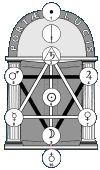
For those wishing to work with the courses and writings of Jean Dubuis, the following approach is recommended: Portae Lucis: The Humanistic and Initiatory Legacy of Jean DubuisIn 1999, Jean Dubuis founded Portae Lucis, an association dedicated to freely transmitting his teaching and distributing his writings, courses, and exercises at no cost. Its purpose is clear: to democratize access to Knowledge and enable personal progress without financial or hierarchical barriers. Portae Lucis makes these writings available in French, English, Spanish, and other languages, with an ongoing commitment to translation in order to reach an ever-broader audience. Jean Dubuis left a singular mark on Western initiation. Through his scientific and rational approach, he demystified traditions often seen as obscure or inaccessible. His emphasis on experimentation and individual autonomy opened a path where Knowledge is available to all who seek to advance freely.
Even today, his teaching continues to inspire many seekers in search of Truth, offering a clear path toward reconciling Science, Spirituality, and direct experience of the Divine.
Neither Guru nor MasterAt the end of each lesson, Jean Dubuis invited students to “Ora et Labora” (“Meditate and Work”). He consistently aligned himself with the teaching attributed to Gautama Buddha:
Don't believe something just because someone showed you
Note :
To reach an increasingly wider audience, the Portae Lucis association provides a validated version of Jean Dubuis' writings in French, English, and partially in Spanish. |